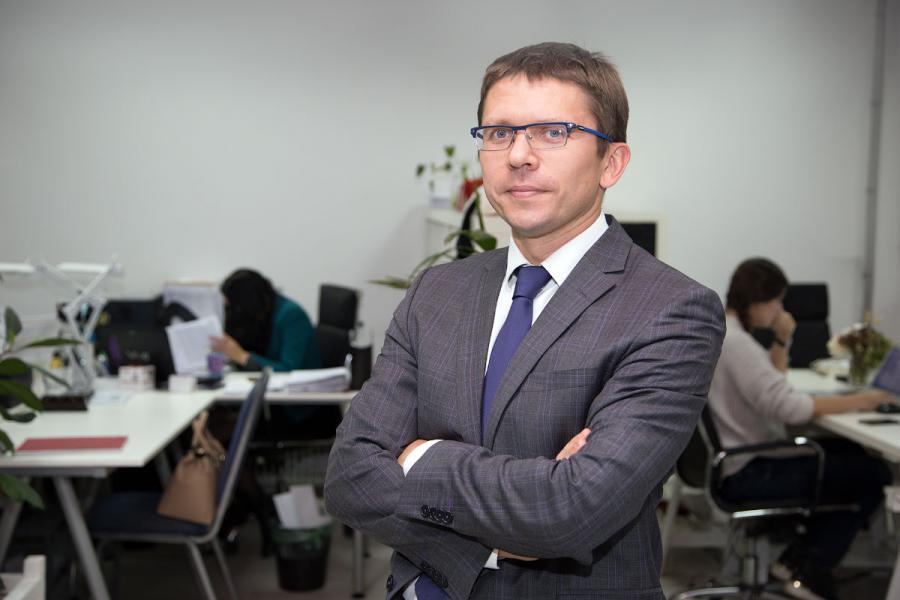
Alexey, the main question is why this industry, why organizing events?
Firstly, this is an industry with a very short period of time between idea and implementation. From the idea to the moment you see a specific solution, the live emotions of the viewer, it can take from several days to several months.
Secondly, there is a lot of magic for me personally in this industry: why do people do THIS? Why do they do events and go to them? Why and how does our perception of the world change when we are inside this action?
Finally, the events of recent years are the finale of a large communication work, the icing on the cake. Lately, we have been doing more and more projects that include the analytical part, strategy development, PR, and digital part. That is, we communicate on behalf of the brand, of which events are a personal, tactile part.
The market has changed a lot. Continuing to do “just events” means missing much of the big picture.
Why choose you? I'm not asking to go behind the scenes, but if you have any personal proven techniques that work, can you briefly share them?
Did you know that if a person cannot see from birth, he does not dream?
Yes!
But I didn’t know before. The point is that in this case there is no material from which you can create a picture in your imagination. You don’t dream about a bear or a mountain because a person doesn’t know what these objects look like. No visual base.
It’s the same in work: if you don’t have an array of data in your head on, say, marketing, then you won’t come up with an idea. This is impossible, because creating something new is always using existing material, that’s how the brain works.
We dig a lot, study, learn, in order to bring something still unrealized and fresh.
This is the first thing.
Secondly, we initially built a company that could operate for a hundred years. Accordingly, relationships with clients are built in the same way: long-term benefits for us outweigh short-term ones.
Thirdly, we invest a lot of time in analyzing the client, his needs, previous experience, and understanding of his business. This part of the work is often underestimated - they go straight to creativity.
There is another interesting theory: if you put a person on a desert island and after 25 years send him a small questionnaire with the usual questions: “Are you fat or thin, tall or short, handsome or ugly?” - he will not be able to answer them, since he has no one to compare himself with.
Even if we send not a child, but a mature adult?
Yes. Hence the question: do you study related areas, somehow touch on them, draw parallels with our industry?
If we talk about markets, we have been watching Europe very closely for several years. And you know what's surprising? There are a lot of technically advanced cases that we need to grow and grow towards, but there are very few cool, fresh project ideas. And in the huge Asian market, everything is not so technically perfect, but much more creative, bolder, more ideological. Therefore, our attention shifted to this region.
But it is very important to understand: to come up with an idea for an event, you should not look for inspiration in the experience of past events, you should dig in general, take a broad look at things, fully study marketing companies and strategies.
I’ll tell you a case about ketchup, which was a great success in India. The organizers addressed the audience: “Children and their parents, stop hiding behind computers and smartphones, let’s meet in real life and do something good and interesting together. We sent you tomato seeds, try to grow real fruits from them.” These seeds were distributed in magazines and by mail upon request. Children and their parents grew tomatoes and talked about it on social networks and on the project website. At first glance, ketchup producers promoted a universal mission of kindness, unity and care for nature. But the mission was related to tomatoes, and accordingly, in the minds of the population, they drew a parallel with the fact that their ketchup is made from tomatoes. The final was, of course, a big event where the participants brought the results of their efforts.
Do you think in Russia people would come with tomatoes?
We need to try! :) Personally, I would love to grow something with my child.
Tell us about your internal projects.
This year we launched the Mini-MBA program. The number of seminar participants usually does not exceed the limit of 50 people. Of these, 10 are our employees, the rest are clients, partners, etc.
We perceive our team as the audience that also needs to be “pumped up”. Young specialists are interested in the prospect of growth and competent experience, both practical and theoretical. I would like to note that all employees holding management positions in our company began their careers at Eventum Premo, they grew up with us.
If you and Alexander leave for six months without mobile communications and the ability to control the work process, will the company still function successfully?
It's not clear why we would do this. We love it here! :)
But if we do leave, the company will function successfully. Each department head in the company can make a decision independently. Our participation is only needed for advice or risk analysis.
Philosophical question-reasoning: maybe it’s time to pay for ideas and make tenders paid?
We've encountered this. There are tenders that are held in two stages: the first is a paid tender for the idea, the second is for implementation.
I don't think you can take someone else's idea and successfully implement it. Idea and implementation go hand in hand. For example, the person who wrote the book knows much more about this topic than the person who read it, because the author cannot fit all his knowledge on the pages.
Someone else’s idea is just a dry expression, without a background and a sense of the desired style. Even if someone steals our idea, the implementation will be terribly inadequate. I'm sure of it.
Thanks for the conversation! I would like to end the conversation with some practical advice from Alexey Berlov.
Finally, I want to share a professional note. We spent a long time figuring out what happens to the attention of a person who comes to an event. In the age of technology, our main enemy, our main competitor is the gadget.
Constantly distracting the audience with their own smartphones is a problem for the organizers, a problem for the communication you are building. You need to do something that will make a person forget about the smartphone and leave it in his pocket. And only use it to capture your event on camera.
We need a show. It's show time.
Vivid examples are the presentation of the new generation SMART, the opening of the SAP Forum, “Oriflame 360 degrees”. People react to this! This time.
I can easily endure an hour-long lecture without splitting my attention. But many people find it difficult to maintain concentration for even ten minutes. This is why we are reducing the formats of our events, performances, and videos. Conciseness is our everything. That's two.
Finally, three. If you succeeded, if you managed to attract attention, then it’s time to tell a good story. To get people to stay with you, you need quality content. Today, audiences have very high demands on the quality of stories.